The Complete Guide to Epoxy Flooring for Industrial Spaces
How to choose the right epoxy system for factories, warehouses and showrooms, from surface preparation to coating thickness and long-term maintenance.
- Author
- Badan Singh
- Published
- Reading time
- 2 min read
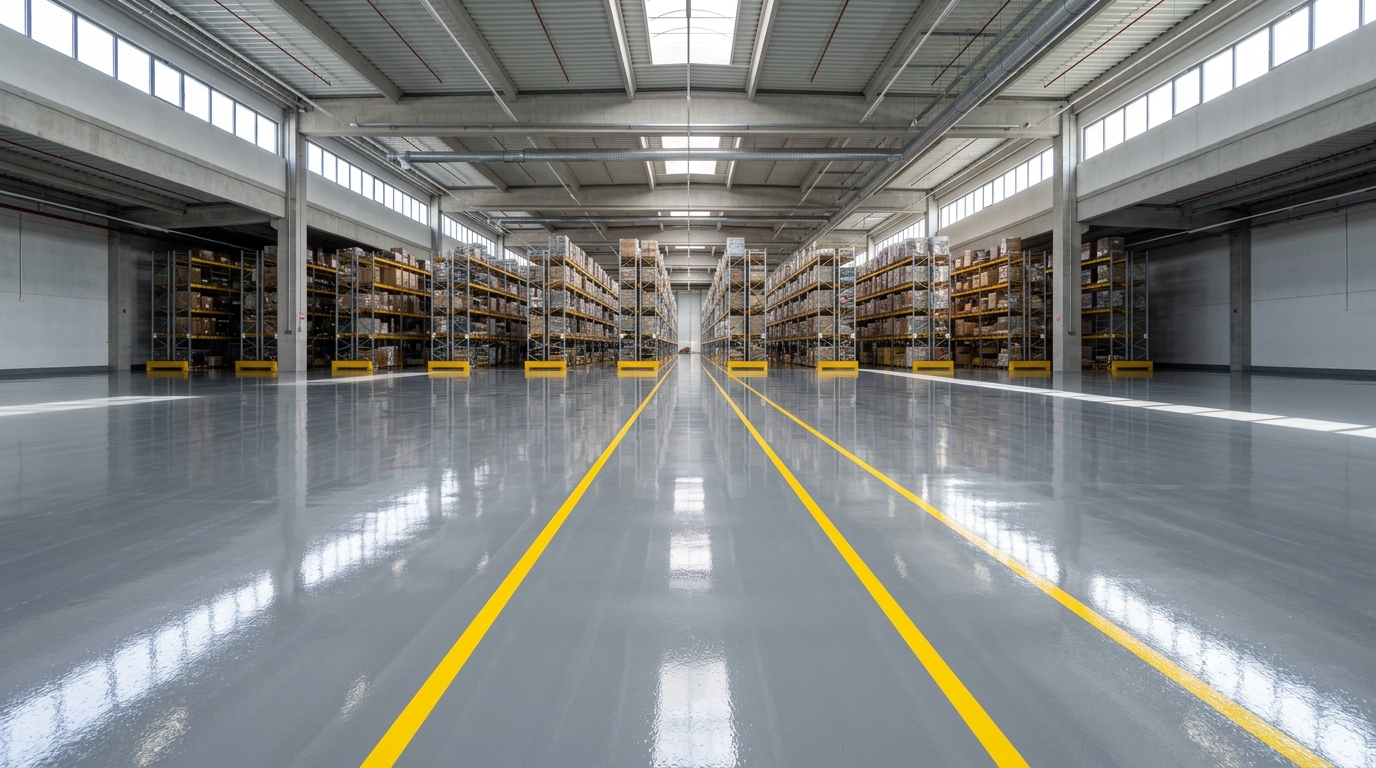
Industrial floors take more abuse than almost any other surface in a building. Forklift traffic, chemical spills, heavy racking and constant cleaning all wear down bare concrete quickly. A properly specified epoxy system turns that concrete into a seamless, hygienic and long-lasting surface.
Why epoxy works so well in industrial settings
Epoxy bonds chemically with prepared concrete to create a hard, non-porous layer. Because there are no joints or grout lines, dirt and moisture have nowhere to hide, which is why epoxy is the default choice for pharmaceutical units, food processing plants and clean warehouses.
- High resistance to oils, acids and cleaning chemicals
- Seamless finish that is easy to clean and sanitise
- Improved light reflectivity, reducing lighting load
- Custom colours and safety line markings for traffic zones
Choosing the right system
Not every epoxy is the same. A 2-3 mm self-levelling system is ideal for clean production areas, while heavy-duty mortar screeds of 4-6 mm suit loading bays and workshops. Anti-static systems are essential for electronics assembly, and anti-skid finishes are a must for wet areas.
Surface preparation decides the result
Most epoxy failures we are called in to fix come down to poor preparation. Concrete must be fully cured, moisture-tested, and mechanically ground or shot-blasted to open the pores. Cracks and joints are repaired before any primer goes down.
“A floor is only as good as the preparation underneath it. We spend as much time on grinding and testing as we do on coating.”
Maintenance tips
- Sweep daily and use a pH-neutral cleaner for wet mopping
- Place mats at entry points to reduce abrasive grit
- Clean chemical spills immediately rather than letting them sit
- Schedule a top-coat refresh every few years in high-traffic zones
With the right system and proper care, an industrial epoxy floor can perform for a decade or more. If you are planning a new facility or renovating an existing one, our team can inspect the site and recommend the right specification.